How Artificial Intelligence Is Transforming the Way Brands Communicate, Create, and Connect
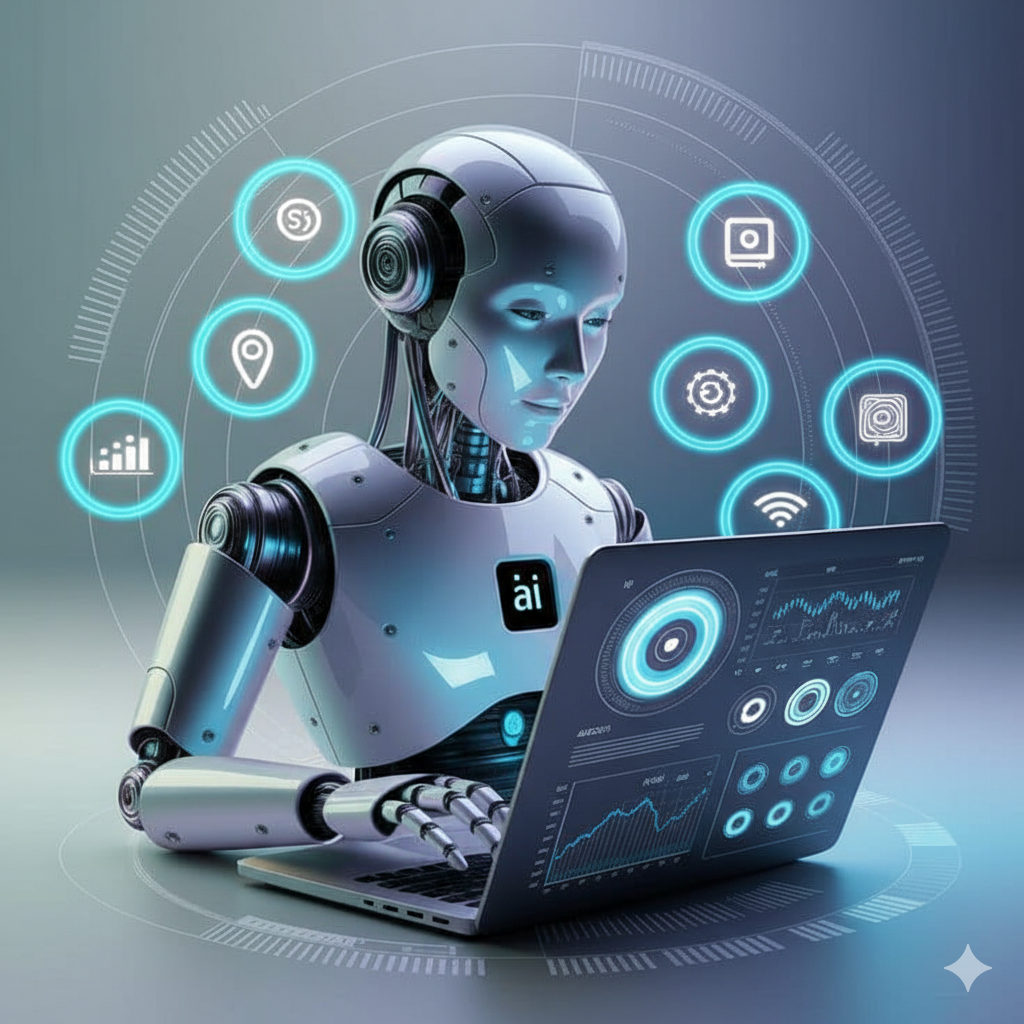
A Digital Marketing Strategist constantly looks for smarter ways to manage marketing tasks and improve results. Today, artificial intelligence is becoming a powerful marketing assistant that helps businesses analyze data, automate tasks, and create more personalized customer experiences.
Imagine a marketing assistant who never sleeps, meets every deadline, writes copy in seconds, analyzes data instantly, and personalizes customer experiences at scale — all without a coffee break. That’s AI in marketing today. From startups to Fortune 500s, businesses are leveraging AI not as a gimmick, but as a real competitive advantage. The question isn’t if AI will impact marketing, but how much of your strategy it’s already shaping. In this blog, we’ll explore AI’s role, its limitations, and how to use it strategically to grow your brand.
The Rise of AI in Marketing: A Quick Overview
Artificial intelligence has been quietly embedding itself into marketing tools for years. Recommendation engines on Netflix and Amazon, targeted ads on Facebook and Google, spam filters in your inbox — these were all early forms of AI-powered marketing. But the explosion of generative AI tools like ChatGPT, Jasper, MidJourney, and Google Gemini has brought AI front and center for marketers of all sizes.
According to recent industry reports, over 60% of marketing teams are now using some form of AI in their workflows, and that number continues to climb. The appeal is simple: AI helps teams do more, faster, with fewer resources. Whether it is drafting email subject lines, generating ad copy variations, analyzing audience behavior, or predicting which customers are likely to churn, AI has become an indispensable layer in the modern marketing stack.
But beyond the buzz and the hype, what does AI actually do for marketers day to day?
What AI Can Do for Your Marketing Today
1. Content Creation at Scale
AI tools like ChatGPT and Claude help marketers draft blogs, social media posts, emails, and product descriptions quickly, speeding up first drafts and freeing time for strategy and creativity.
2. Hyper-Personalization
AI analyzes customer behavior to deliver personalized recommendations, offers, and messages in real time, boosting engagement, satisfaction, and conversions.
3. Data Analysis & Predictive Insights
AI processes large volumes of marketing data, identifies trends, and predicts future performance, helping marketers optimize budgets, target high-value segments, and plan campaigns more effectively.
4. Chatbots & Conversational Marketing
Advanced AI chatbots handle inquiries, guide purchases, qualify leads, and offer 24/7 support, reducing costs while enhancing customer satisfaction.
The Creative Partnership: AI and Human Marketers
It is important to be clear about something: AI is a tool, not a replacement. The most successful marketing teams in the world are not handing everything over to algorithms and walking away. They are using AI to handle the repetitive, data-heavy, time-consuming tasks so that their human team members can focus on strategy, storytelling, brand voice, and genuine creativity.
Think of it like this. A great chef does not refuse to use a food processor because it is “not traditional.” They use it to chop vegetables faster so they can spend more time perfecting the sauce. AI is your marketing food processor. It handles the chopping. You handle the flavor.
The brands winning with AI are those that maintain a strong, authentic human voice at the center of their communication while leveraging AI to extend their reach, speed, and analytical power. The human-AI partnership, when done right, is greater than the sum of its parts.
Understanding AI’s Limits in Marketing
AI has the potential to transform marketing, but it’s not without flaws. Recognizing its boundaries is just as crucial as leveraging its strengths.
- Generic Output: AI can generate content quickly, but without careful human guidance and editing, it often produces formulaic or repetitive messaging. Maintaining your brand’s distinct voice requires active oversight.
- Data-Dependent Performance: AI’s insights and output are only as good as the data behind them. Biased, incomplete, or outdated data can lead to inaccurate targeting, reinforce stereotypes, or harm your brand’s reputation.
- Limited Emotional Understanding: While AI can mimic empathy, it cannot truly understand human experiences. Sensitive areas—like mental health, nonprofit work, or grief support—demand human judgment to avoid missteps.
- Ethical and Legal Challenges: Copyright, transparency, and data privacy issues surround AI-generated content. Staying updated on evolving regulations is essential to use AI responsibly.
In short, AI is a powerful ally—but human judgment, ethical awareness, and careful supervision remain indispensable.
How to Get Started: Practical Steps for Marketers
1. Audit Your Tasks
List weekly marketing activities and spot repetitive, data-driven, or template-based tasks—ideal for AI (e.g., content drafts, social media scheduling, SEO research).
2. Choose the Right Tools
Start with 1–2 AI platforms for your biggest needs:
-
Content: Jasper, ChatGPT
-
Visuals: Canva AI
-
Personalization: HubSpot, Klaviyo
-
Analytics: Google Analytics 4
Expand gradually.
3. Invest in Learning
Master prompt engineering to communicate clearly with AI for better results.
4. Review & Refine
Always check AI output before publishing to ensure it aligns with your brand voice and standards.
The Verdict
AI is not a distant future trend for marketing — it is here, it is now, and it is accelerating. Brands that embrace it thoughtfully are gaining a real competitive edge: faster content production, smarter personalization, sharper analytics, and more efficient use of their team’s time and talent.
But the brands that will truly thrive are the ones that understand what AI is good at and what it is not. They will use AI to scale the work that does not require a human touch, while doubling down on the human creativity, empathy, and storytelling that no algorithm can replicate.
So yes — AI is becoming your marketing assistant. The only question left is whether you are going to put it to work.
Start small. Stay curious. And always keep the human at the heart of your brand.