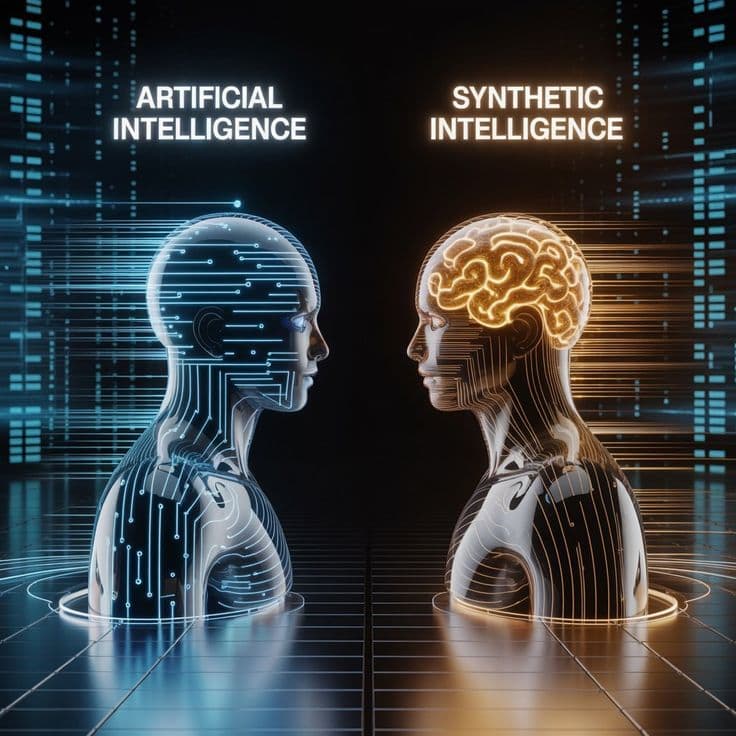
A Digital Marketing Strategist understands how technology and creativity work together in the modern digital world. In 2026, the connection between human imagination and artificial intelligence is becoming stronger than ever. Businesses are using AI tools to create smarter marketing strategies while still relying on human creativity to build meaningful and engaging content.
"2026 marks the rise of AI-assisted content across social media platforms."
2026: Where Human Imagination Meets Artificial IntelligenceThere was a time not too long ago when the debate around artificial intelligence felt like a battle of opposites. Human versus machine. Organic versus algorithmic. Soul versus code. People worried that AI would replace artists, writers, musicians, and designers. They imagined a future where creativity became automated, sterile, and stripped of meaning.
2026 has proven all of those fears beautifully wrong.
What we are witnessing today is not a replacement — it is a renaissance. A moment in history where two fundamentally different kinds of intelligence have learned to sit side by side, each bringing something the other cannot, and together producing work that neither could have created alone. The seamless blend of human and AI creativity is no longer a futuristic promise. It is the defining characteristic of how we create, communicate, and connect in the world right now.
The Myth of the Solo Creator
For centuries, we romanticized the idea of the lone genius — the painter locked in a studio, the novelist burning the midnight oil, the composer channeling something divine onto the page. And while that image carries a certain beauty, it was always more mythology than reality. The truth is, creativity has never been a solitary act.
Writers have editors. Architects have engineers. Filmmakers have hundreds of collaborators. Even the most solitary poet draws from the language of others, the imagery of the world, the emotional residue of human experience. Creativity has always been a conversation — between people, between ideas, between the present and the past.
What AI has done in 2026 is add a new kind of voice to that conversation. One that is tireless, encyclopedic, responsive, and endlessly generative. A voice that does not replace the human artist but amplifies what they are trying to say.
What AI Brings to the Creative Table
-
AI’s strengths in creativity:
-
Provides unmatched speed and scale
-
Excels at pattern recognition across massive datasets
-
Handles repetitive, mechanical creative tasks efficiently
-
-
AI’s limitations:
-
Lacks lived human experience
-
Cannot feel emotions like love, loss, or joy
-
Has no personal stakes or unique story to tell
-
-
Human strengths in creativity:
-
Brings intention, emotion, and cultural context
-
Knows which AI-generated ideas truly resonate
-
Understands why creative work matters
-
-
The human-AI partnership:
-
AI handles vast, mechanical, and repetitive tasks
-
Humans handle meaning, purpose, and intention
-
Together, they create work that is expansive, precise, prolific, and purposeful
-
Where We See It Every Day
By 2026, human-AI collaboration has become integral to creativity across industries. In publishing, AI drafts research, outlines plots, and tests narratives, freeing authors to focus on voice, depth, and storytelling. In music, AI explores harmonies, generates stems, and experiments with sound design, while artists shape emotional impact, release work faster, and take greater creative risks. In visual design, AI quickly generates multiple concept directions from moods or references, which designers then refine for both aesthetic and communicative impact. Even traditionally non-creative fields like medicine, education, and urban planning are seeing AI-human partnerships produce ideas that are more imaginative, responsive, and human-centered than either could achieve alone. Across the board, AI amplifies human creativity rather than replacing it, letting people push boundaries, experiment freely, and focus on what truly matters in their work.
The Learning Goes Both Ways
-
In 2026, human-AI collaboration is changing not just what we create, but how we think about creativity.
-
Working with AI forces creators to articulate moods, tone, intent, and feeling, deepening awareness of their own process.
-
Designers say AI improves their ability to communicate briefs to clients.
-
Writers find AI helps clarify their unique voice by offering alternative perspectives.
-
Musicians become more deliberate in their creative choices through AI collaboration.
-
AI acts as a creative mirror, reflecting human intentions and helping creators see themselves and their work more honestly.
The Ethics of Co-Creation
None of this is without complexity. The rise of human-AI co-creation has raised important questions about authorship, attribution, originality, and the value of creative labor. These are conversations our culture is still actively working through, and they deserve to be taken seriously.
Who owns a piece of work that was shaped by both human vision and AI generation? How do we recognize and compensate the human creators whose work AI systems learn from? What does originality mean in a world where a single prompt can produce a thousand variations of an idea?
The creative community has been wrestling with these questions loudly and thoughtfully. And while there are no perfect answers yet, the direction is increasingly clear: transparency, attribution, and human accountability must remain central to how we think about AI-assisted work. The human artist is not just a prompter — they are the author of intent, the judge of quality, and the moral voice that determines what is made and why.
The seamless blend of human and AI creativity is not seamless because these tensions do not exist. It is seamless because creators are finding ways to work through them — with honesty, with intention, and with a commitment to keeping the human heart of creativity beating at the center of everything.
What Comes Next
Standing here in 2026, it is tempting to ask what the future of human-AI creativity looks like. But perhaps the better question is: what does it feel like?
It feels collaborative. It feels fast but not hurried. It feels like the kind of creative freedom that comes when you no longer have to fight the tools when the technology finally gets out of the way and lets the idea take the lead.
It feels like human creativity has not been diminished. It has been expanded. Like we have been handed a new instrument with a range no one has fully mapped yet, and the music we are making with it is unlike anything we have heard before.
The artists, writers, designers, and thinkers who are thriving right now are the ones who have embraced this reality without abandoning their humanity. They are using AI to go further, faster, and in more directions — while still bringing the irreplaceable gift of a human perspective to everything they make.
2026 does not belong to humans or to machines. It belongs to the extraordinary things that happen when both are working together, each at their best, in the service of something worth making.
That is the seamless blend. And it is only just beginning.